
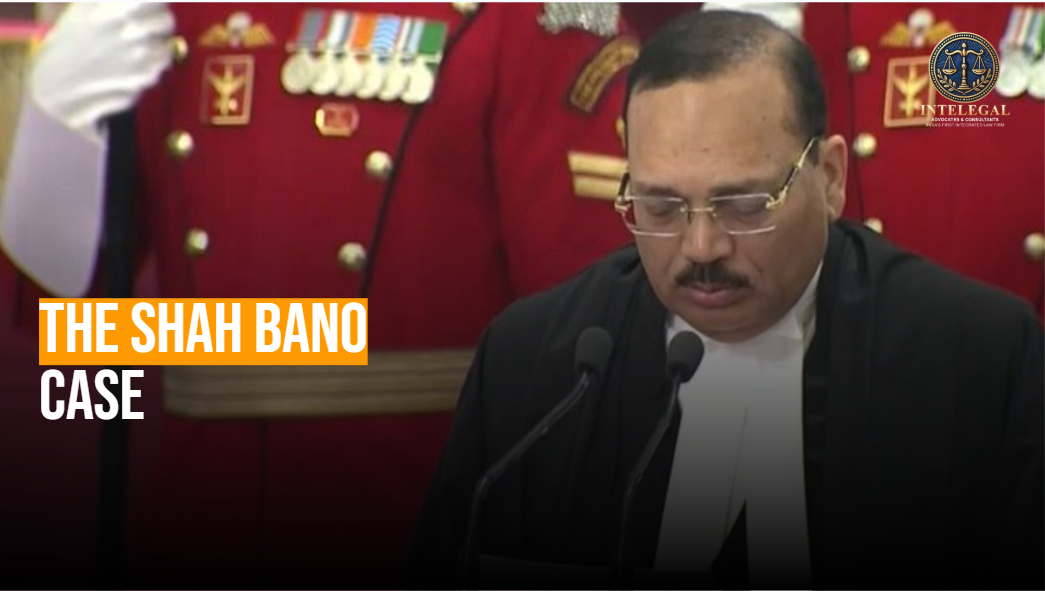
The Shah Bano case (Mohd. Ahmad Khan v. Shah Bano Begum, 1985) stands as one of India's most significant judicial pronouncements on gender equality and the intersection of personal law with constitutional rights. This landmark case fundamentally challenged the traditional interpretation of Muslim personal law regarding divorced women's maintenance entitlements and sparked one of the most contentious political and legal debates in independent India.
Background and Facts
Shah Bano, a 62-year-old Muslim woman from Indore, Madhya Pradesh, had been married to Mohammed Ahmad Khan, a prominent lawyer, since 1932. The couple had five children together. After more than four decades of marriage, Shah Bano's husband asked her to move to a separate residence, and he subsequently took a second wife. When Khan stopped providing maintenance to Shah Bano, she filed a petition in April 1978 under Section 125 of the Criminal Procedure Code (CrPC), seeking financial support for herself and her children. In response, Khan granted her an irrevocable talaq (triple divorce) in November 1978, arguing that under Muslim Personal Law, he was obligated to provide maintenance only during the iddat period—the three-month waiting period prescribed by Islamic law following a divorce.
Judicial Proceedings
The case progressed through multiple levels of the judicial system. In August 1979, the trial court directed Khan to pay ₹25 per month as maintenance to Shah Bano. Dissatisfied with this amount, Shah Bano filed a revision petition before the High Court of Madhya Pradesh, which enhanced the maintenance amount to ₹179.20 per month in July 1980. Khan then appealed to the Supreme Court, contending that Muslim Personal Law exempted him from liability beyond the iddat period. The All India Muslim Personal Law Board intervened in the proceedings, arguing that secular courts lacked authority to interfere in matters governed by Shariat law.
The Supreme Court Verdict
On 23 April 1985, a five-judge bench led by Chief Justice Y.V. Chandrachud delivered a unanimous judgment in Shah Bano's favour. The Court held that Section 125 of the CrPC applied uniformly to all Indian citizens regardless of their religion, and that Shah Bano was entitled to maintenance beyond the iddat period. Justice Chandrachud articulated a powerful principle: "The liability imposed by Section 125 to maintain close relatives who are indigent is founded upon the individual's obligation to the society to prevent vagrancy and destitution." The Court rejected the argument that payment of Mahr (dower) discharged the husband's obligation to maintain an unsupported divorced wife and emphasized that maintenance obligations persisted if the woman remained unable to support herself.
Political Backlash and Legislative Response
The judgment triggered widespread controversy and protests from religious and conservative sections. Responding to political pressure, the Rajiv Gandhi-led Congress government enacted the Muslim Women (Protection of Rights on Divorce) Act, 1986, effectively overturning the Supreme Court's verdict. This legislation restricted maintenance entitlements to the iddat period exclusively and shifted the responsibility for supporting divorced women to their relatives or the Waqf Board. The Act represented a significant retreat from the Supreme Court's progressive stance and was widely criticized as discriminatory and retrogressive.
Lasting Impact and Legacy
Despite the legislative dilution of its effects, the Shah Bano judgment remains profoundly influential in Indian jurisprudence. Subsequently, in the Daniel Latifi case (2001), the Supreme Court clarified that while the Muslim Women Act's validity would be upheld, the Court retained jurisdiction to interpret its provisions generously to protect divorced women's rights. The case reinvigorated debates on the necessity of a Uniform Civil Code and highlighted the tensions between personal laws and constitutional principles of equality and human dignity. Most significantly, Shah Bano's legal battle established that gender equality principles supersede restrictive interpretations of religious personal laws, setting a precedent that influenced subsequent progressive judgments, including the 2017 Triple Talaq judgment.