
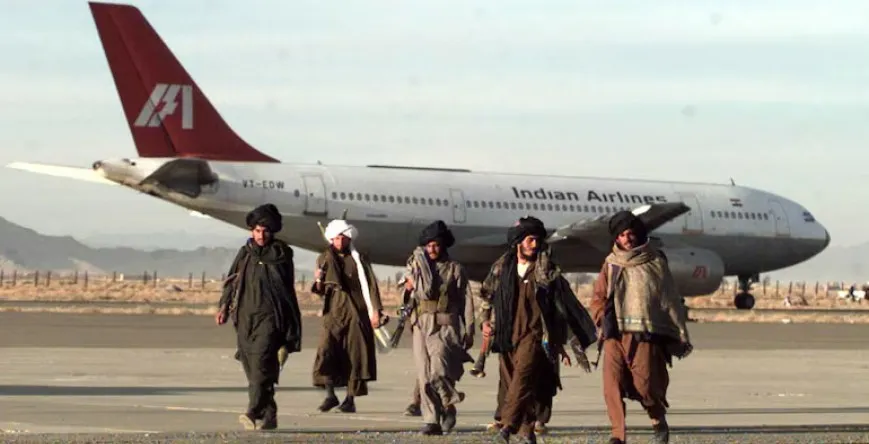
The Reel Real Conspiracy behind IC 814 Kandahar Hijacking
- - Intelligence, Investigative & Legal perspectives
The recent release of a Netflix film inspired by the IC 814 hijacking has rekindled interest in the legal complexities and international jurisdictional issues that arise when a country’s aircraft is hijacked by terrorists. The infamous IC 814 incident, where an Indian Airlines flight was hijacked on December 24, 1999, and flown across multiple countries, remains a pivotal case in the realm of international law and aviation security. This piece explores what exactly happened during those 8 days and its aftermath from a factual standpoint, key insights from the Central Bureau of Investigation (CBI) investigation that followed, the jurisdictional challenges, international framework and the evolution of aviation laws.
The Hijacking
On December 24, 1999, an Airbus A300, operated as Indian Airlines Flight IC-813 from Delhi to Kathmandu and IC-814 from Kathmandu to Delhi. The flight departed Tribhuvan International Airport, Kathmandu, at 4:10 PM IST with 179 passengers, including 174 adults, 4 infants, and an additional child in Business Class not accounted for in the infant count. 11 crew members were also on board.
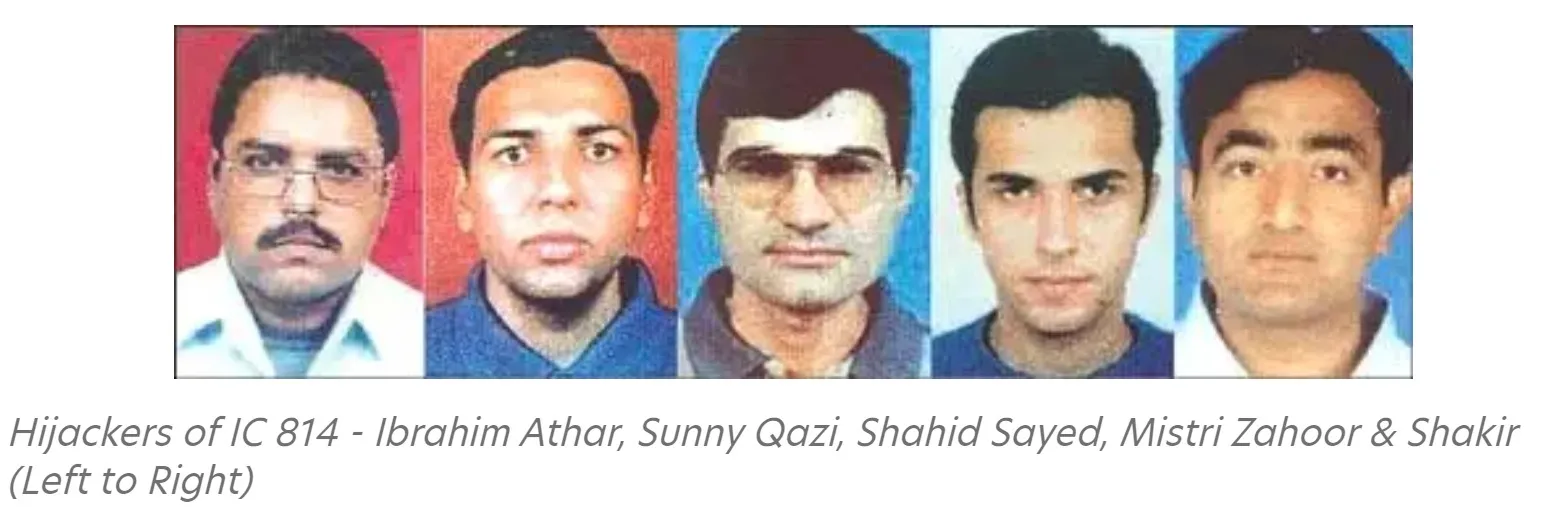
Approximately 45 minutes after takeoff, while the flight was under the control of Air Traffic Control (ATC) Varanasi, the aircraft was commandeered by five hijackers whose real identities, acquired aliases and seat numbers are as mentioned below, because during the course of investigation, the prosecution (CBI) found that the accused were using different names at different times.
● Ibrahim Athar @ Ahmed Ali Mohd. Ali Shaikh @ Javed Amjad Siddiqui @ A.A. Shaikh @ ‘CHIEF’ (Seat 3A) - Brother of Masood Azhar
● Sunny Ahmed Qazi @ S.A.Qazi @ ‘BURGER’ (Seat 2B)
● Shahid Sayeed Akhtar @ S.A.Sayeed @Moti @ Khalid @ ‘DOCTOR’ (Seat 19G)
● Zahoor Ibrahim Mistry @ Z.I.Mistry @ ‘BHOLA’ (Seat 8C)
● Shakir @ Rajesh Gopal Verma @R.G.Verma @ Farooq Abdul Aziz Siddiqui @ ‘SHANKAR’ (Seat 23G)
Key witnesses, including Pilot Captain Devi Saran, crew member Pawan Garg, Satnam Singh and Rajendra Dogra testified during the court trial that the hijackers were armed with revolvers, hand grenades, and knives. The hijackers forced passengers and crew to remain immobilised, some being blindfolded, under threat of violence.
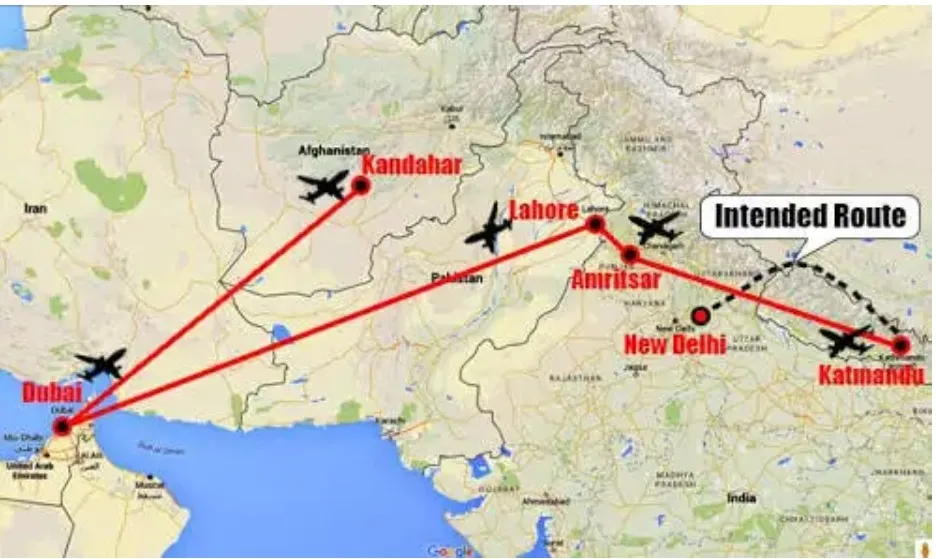
At approximately 16.53 hours IST, within Indian airspace, the hijackers demanded the flight be diverted to Lahore, Pakistan. Due to fuel constraints, Captain Saran attempted to comply but was initially denied permission by Lahore ATC. The aircraft made an unscheduled landing in Amritsar at around 19.01 hours IST for refuelling. Hijackers forced Captain Saran to keep the engines running and prevented movement to the apron. Tensions escalated as the hijackers threatened violence, resulting in the stabbing of passengers Rupin Katyal and Satnam Singh, the former succumbing to his injuries.
The aircraft took off at 19.45 hours from Amritsar without any refuelling. After being airborne for 4-5 minutes, the Pilot sought permission to land at Lahore. However, initially the ATC, Lahore did not permit the air-craft to land at Lahore, but in view of low fuel and the fact that there was no option for the Pilot but to crash land the aircraft, ATC Lahore permitted the aircraft to land at Lahore for the purpose of refuelling at 20.45 hours. The flight was again airborne and the hijackers wanted to land at Kabul. Since there was no night landing facility at Kabul, the aircraft was taken to the United Arab Emirates (UAE), where it landed on 25.12.9999 at 00.30 hours at Minhad Base in Dubai, where 27 passengers were released including the dead body of Rupin Katyal and injured Satnam Singh. The aircraft again took off at 01.30 hours from Minhad airport and landed at Kandahar in Afghanistan at 04.00 hours.
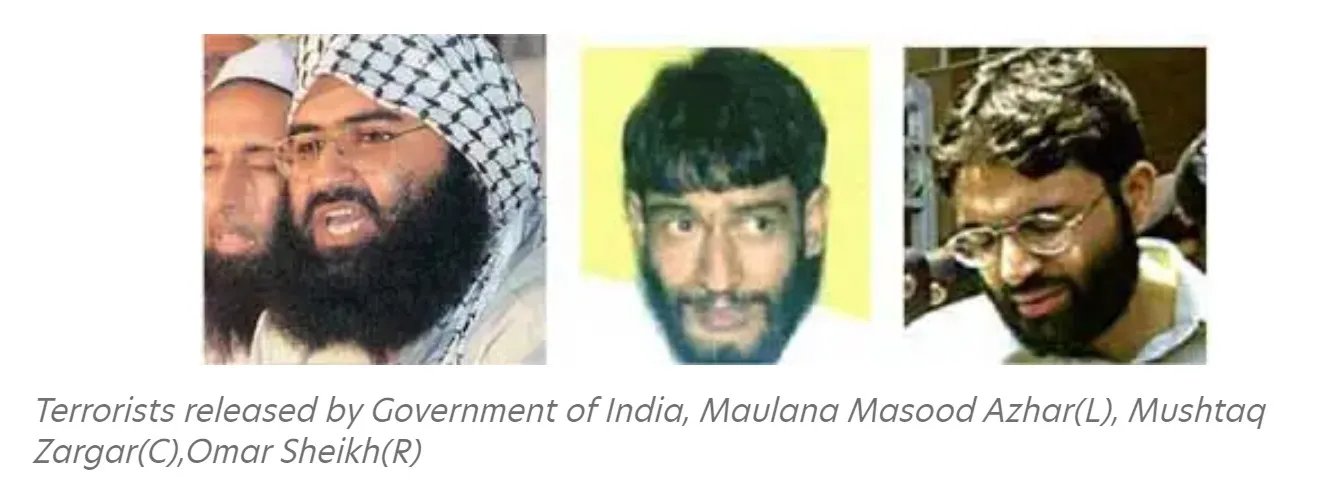
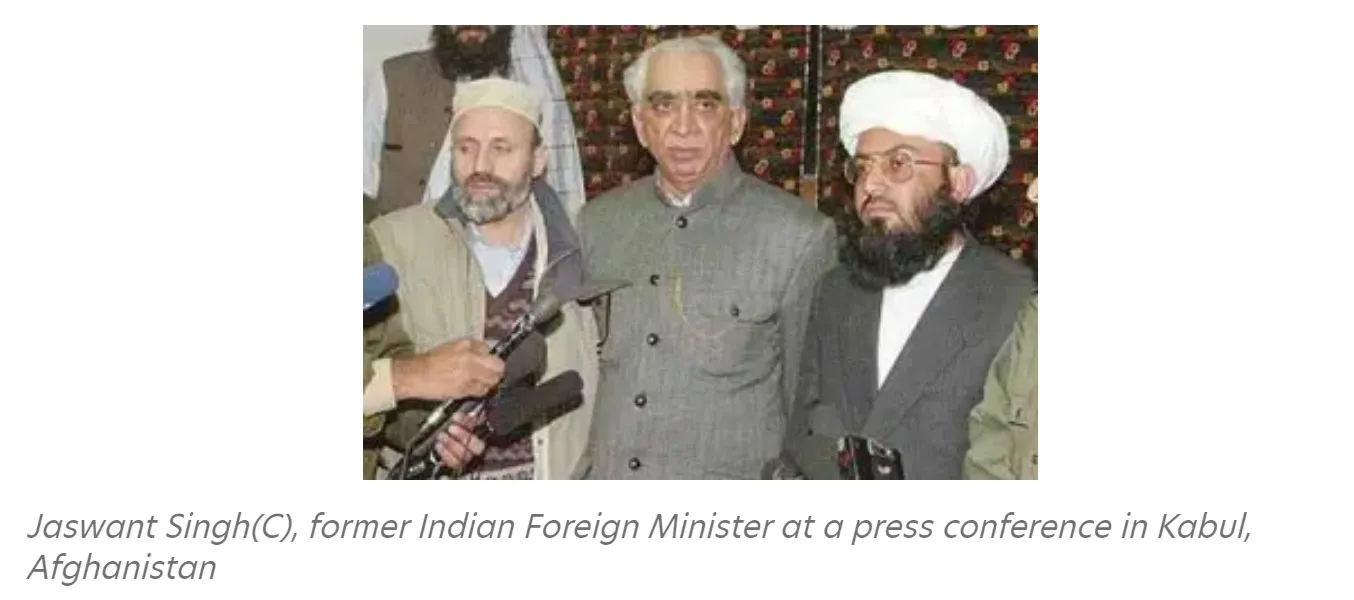
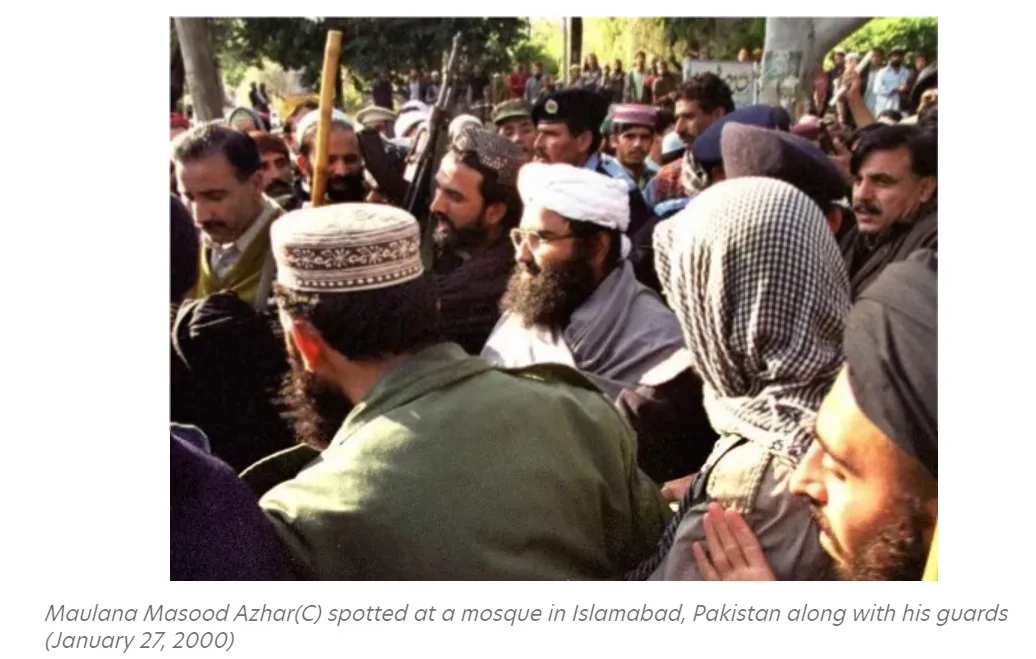
The initial demand of the hijackers was to seek release of Masood Azhar confined in Jammu jail, 35 other militant associates, handing over of dead body of Sajjad Afghani (a close associate of Maulana who was killed while attempting jailbreak and whose body stood buried at Jammu), and US $2 million as ransom. The Government of India released Masood Azhar, Umar Sheikh and Mohd. Zargar on 31.12.1999 at about 17.30 hours in exchange of the remaining passengers and the aircraft as a result of the negotiations between the Indian team and the hijackers.
The Conspiracy
A 'zero' FIR was lodged on 26.12.1999 at Indira Gandhi International Airport, Delhi and later on 29.12.1999 at Amritsar. It was on 30.12.1999, that two other accused Abdul Latif and Yusuf Nepali were arrested at Mumbai during the course of investigation of a bank dacoity case in respect of which a FIR was lodged on 06.10.1999. During the course of investigations, the Mumbai Police recovered Indian passports, driving licences, and the documents pertaining to hotel reservations etc. The Indian passports recovered were of hijackers, the nationals of Pakistan, though not used in the process of hijacking of the aircraft. On 29 December, Indian intelligence had intercepted a phone call from Pakistan to Abdul Latif in Mumbai. The phone call directed Latif to contact a news agency in London and inform that the hijackers would blow the aircraft if their demands are not met.
CBI investigation revealed that the conspiracy to hijack an Indian Airlines flight started somewhere in July-August, 1998 when Yusuf Azhar, brother-in-law of Masood Azhar, met Abdul Latif, to make efforts for the release of Masood Azhar. It was in September 1998, that Yusuf Azhar sought the help of Abdul Latif to obtain a visa for him for Bangladesh on an Indian passport in the name of Mohd. Salim Mohd. Karim. In February 1999, Yusuf Azhar asked Abdul Latift to arrange a flat on rent. Abdul Latif arranged a flat in Madhav Building in Goregaon West, in the fictitious name of Javed A. Siddiqui. In April 1999, Yusuf Azhar reached Bombay along with Shankar. Both of them stayed in the flat at Madhav Building. Yusuf Azhar then gave photographs of Ibrahim Athar and Shankar to obtain a passport for them. Abdul Latif got in touch with Seven Travels for arranging their passports.
In the month of May-June, 1999, Akhtar, Asraf and Yusuf Azhar visited Jammu to facilitate the escape of Masood Azhar through a tunnel from Jammu Jail. In that attempt Sajid Afghani, in custody in Jammu Jail, was killed but two of the militants Akhtar and Yusuf Azhar were caught by the Jammu Police while roaming near jail on suspicion. It was in June, 1999, Yusuf Azhar told Abdul Latif to arrange for another flat on rent in Bombay. At his request, a flat in Golden Soil Apartments was arranged again in the fictitious name of Javed A. Siddiqui. Abdul Latif along with Yusuf Ahzar started residing in this flat. Yusuf Azhar gave passport in the name of Mohd. Salim Mohd. Kalim, bearing his photograph to Abdul Latif, with instructions to go to Delhi to obtain a visa for Bangladesh for both of them. Abdul Latif took the passport of Yusuf Azhar and his own passport which was in the name of Vipin Bharat Desai. In Delhi, the Latif stayed in Nizami Hotel, Nizamuddin, Delhi. Abdul Latif obtained the visa from the Bangladesh Embassy.
After obtaining the visa, Abdul Latif went to Mumbai by Golden Temple Mail train. In July, 1999, Abdul Latif and Yusuf Azhar visited Calcutta. They stayed in Hotel Aminia at Jakaria Street. After staying in the hotel for 2 days, they travelled by car to Dinapur Border. After crossing the border, they travelled by bus to Dhaka. Thereafter, Yusuf Azhar went to Karachi and Abdul Latif was informed that Abdul Rauf, younger brother of Masood Azhar, would be reaching Dhaka via Kathmandu, where Abdul Latif should receive him. Abdul Rauf discussed the detailed plan made by Harkat-ul-Mujahideen for release of Masood Azhar from jail.
At the same time, another brother of Masood Azhar, named Ibrahim Athar was also making efforts for the release of Masood Azhar in Kathmandu. Shahid Akhtar & Shakir reached Dhaka from Bombay and then left for Karachi. Abdul Rauf arranged for the stay of these persons in Dhaka near the Cantonment area i.e. near the house of former President of Bangladesh, Sheikh Mujibur Rehman, in which Abdul Latif, Yusuf Azhar, Sunny Ahmed Qazi and Shakir stayed. After 3-4 days Mistri Jahoor Ibrahim also arrived in the flat. After another 3-4 days, Shahid Akhtar also reached there. Later after 2-3 days Ibrahim Athar also joined. It was in September, 1999, that a meeting of seven persons was arranged. Ibrahim Athar told them that he has been working on this plan for more than a year in Kathmandu as the Indian Airlines flight can be easily hijacked. He also told him that he is working for arrangements for weapons from Kathmandu itself. At the request of Ibrahim Athar, Abdul Latif was to procure Indian documents for the Pakistani militants. Ibhrahim Athar asked Abdul Latif to obtain Indian Driving Licences and Passports. Ibrahim Athar told him that Indian Airlines flight will be hijacked from Kathmandu and will be taken to Afghanistan. He also told him that he had talked to the Minister in Taliban, who assured cooperation in this regard.
It was on 11.09.1999, that Abdul Latif came to India with Qazi Sunny Ahmed. Firstly, they went to Siliguri and then reached Bombay via Patna. Qazi Sunny Ahmed stayed in Golden Soil Apartments. Abdul Latif contacted Pragati Motor Driving School for obtaining a driving licence for Qazi Sunny Ahmed. He also contacted Seven Travels for obtaining passports for Qazi Sunny Ahmed. Abdul Latif obtained a prepaid SIM card for his mobile, the number of which was 9820110317. The said mobile was used to remain in touch with Abdul Rauf. In October, 1999, Abdul Rauf sent a message through mobile to Abdul Latif that he was sending two more Pakistani militants in Malda Town of West Bengal and Abdul Latif should send someone to receive the said militants. Abdul Latif arranged for Chandan Rai, a waiter in a restaurant owned by his step brother. On reaching Bombay, both of them stayed in a flat in the Golden Soil Apartment. Shakir contacted Silver Motor Driving School for his driving licence and Abdul Latif contacted Seven Travels for getting a passport for Shahid Sayeed Akhtar. Zahoor Ibrahim Mistri came subsequently as informed by Abdul Rauf. Sunny Ahmed Qazi took Zahoor Ibrahim Mistri to Pragati Motor Driving School to obtain the driving licence for him. Abdul Latif gave photographs of Zahoor Ibrahim Mistri to Suresh of Seven Travels for preparation of passports.
In November, 1999 Abdul Latif reached Kathmandu with Shahid Sayeed Akhtar on an Indian Airlines flight. They stayed in Aminia Hotel, Calcutta. They boarded a train from Sealdah Railway Station for Jalpaiguri, West Bengal and reached Kathmandu on 04.11.1999 by road and stayed in Imperial Hotel, Kathmandu till 10th November. Shahid Sayeed Akhtar called for his licence through a courier to Kathmandu prepared by Vaishali Driving School with the assistance of Abdul Latif. Abdul Latif stayed in Tibet Guest House in Thamel Area in Kathmandu. Shahid Sayeed Akhtar was in touch with Ibrahim Athar in Pakistan. Ibrahim Athar told Shahid Sayeed Akhtar that he would reach Kathmandu on 19.11.1999. Abdul Latif and Shahid Sayeed Akhtar received Ibrahim Athar and all three stayed at Tibet Guest House in Kathmandu. Shahid Sayeed Akhtar brought weapons from his room that contained three revolvers; three hand grenades and a number of cartridges. Such weapons were to be used in hijacking of the Indian Airlines flight. On 23.11.1999, they checked out of the New Guest House and took a room in Hotel Tuluchi in the Thamel area of Kathmandu. Ibrahim Athar stayed with Abdul Latif till 25.11.1999. Abdul Latif came to Bombay alone on a Royal Nepal Airlines flight on 25.11.1999.
Abdul Latif obtained a driving licence for Ibrahim Athar from Vaishali Driving School. On receiving a message from Ibrahim Athar, Abdul Latif took the documents along with Zahoor Ibrahim Mistri to Kathmandu. Abdul Latif firstly went to Gorakhpur from Bombay by train and then reached Kathmandu. Abdul Latif stayed in Swoniga Hotel, Kathmandu under the name of Vijay Gupta. On 10/12.12.1999, Sunny Ahmed Qazi and Zahoor Ibrahim Mistri also reached Kathmandu and stayed in Hotel Imperial. They brought the driving licence of Ibrahim Athar. The said driving licence was in the name of Ahmad Ali Mohammad Ali Sheikh. On 11.12.1999, Abdul Latif and Shakir stayed in Hotel Surya in the name of Gupta. On 13.12.1999, Abdul Latif along with Shakir, Qazi and Mistri came to Hotel Pisang in Kathmandu. Abdul Latif checked in as Mr. Gupta of Bombay. In a meeting called by Ibrahim Athar at Kathmandu Zoo on 13.12.1999, all the hijackers were present. In that meeting, final touches were given to the plan of the hijacking of the Indian Airlines Flight and that Abdul Latif was not to remain present during hijacking. He was instructed to return to Bombay and remain in touch with Abdul Rauf in Karachi. The code names were given to all the five hijackers i.e. Chief to Ibrahim Athar, Burger to Sunny Ahmed Qazi , Doctor to Shahid Sayeed Akhtar, Shankar to Shakir @ Rajesh Gopal Verma and Bhola to Zahoor Ibrahim Mistri.
Ibrahim Athar instructed Abdul Latif to obtain confirmed air tickets for them for any date from 20.12.1999 to 30.12.1999 of Indian Airlines flight from Kathmandu to Delhi. He was further instructed to purchase the air tickets for himself one week before the date for which the tickets for the aforesaid five persons were to be purchased. It was discussed in the meeting the manner to take the weapons inside the aircraft. Ibrahim Athar chose three persons for carrying weapons inside the aircraft which included himself, Qazi Sunni Ahmed and Sayeed Akhtar. It was decided that any of the three persons would conceal the weapons under his clothes and would go inside the airport in advance and thereafter give signal to the others. It was planned that if Ibrahim Athar managed to pass the immigration and security check at the airport, he would inform the other militants in the hotel asking them to come to the airport and that other militants would join him in the lounge of the Airport.
Thereafter, Abdul Latif purchased a business class ticket in the name of Ahmed Ali Mohd Ali Sheikh from Himalayan Travels, Kathmandu for 27.12.1999. He went to Everest Tours and Travels to purchase the Economic Class tickets for the remaining militants for 27.12.1999. He was informed by the travel agency that the confirmed tickets for 27.12.1999 were not available, but were available for 24.12.1999. He cancelled the business class tickets of A-1 for 27.12.1999 and purchased tickets for 24.12.1999. He took tickets for Qazi Sunny Ahmed from Gorkha Travels. He also purchased three tickets from Everest Tours & Travels, Kathmandu for Bhola, Doctor and Burger. All these tickets were handed over to Ibrahim Athar in Hotel Pisang. Abdul Latif took air tickets for himself on 17.12.1999 and returned to Delhi where he stayed in Hotel Nizami at Nizamuddin, Delhi. He took Golden Temple train from Delhi to Bombay on 18.12.1999 and reached Bombay on 19.12.1999. After reaching Bombay, Abdul Latif contacted Abdul Rauf in Karachi. Abdul Rauf remained in touch with Abdul Latif till his arrest on 30.12.1999.
The other accused in Kathmandu remained in touch with Abdul Latif till 24.12.1999. On 23.12.1999, Latif purchased another prepaid SIM card for his mobile phone bearing No. 9820110945. He received a message on 24.12.1999 that they were sending one Yusuf Nepali to India and that Abdul Latif should make arrangements for their stay at Golden Soil Apartment. He was also instructed to prepare passports for them and to obtain visas for Bangladesh. On 24.12.1999, he received a phone call that Ibrahim had passed through the metal detector inside the airport and that they were leaving the hotel. Abdul Latif informed Abdul Rauf in Karachi. Abdul Latif received a message at 2.30 p.m. that the flight is delayed by two hours.
At about 5.45 p.m., he heard news on the television that the Indian Airlines flight IC-814 had been hijacked. He conveyed this to Abdul Rauf in Karachi. On 25.12.1999, Yusuf Nepali told Abdul Latif on telephone that he was coming to Bombay from Gorakhpur on Kushinagar Express. Abdul Latif received a telephone call from Abdul Rauf that he will not be available for 2/3 days as he is going to Kandahar as he wanted to help the hijackers, who were inside the aircraft. On 27.12.1999, Abdul Rauf informed him that he could not go to Kandahar, but he was sending Rs.1 lakh for the family of Yusuf Nepali, through Hawala. On 29.12.1999, he received a mobile number of Anjum Mir, representative of BBC in London to record a threat that if the Indian Government did not concede to the demand of the hijackers, they would kill the passengers and blow up the aircraft. Abdul Latif could not contact Anjum Mir, but got recorded a threat on BBC. Abdul Latif was arrested on 30.12.1999 at 11.00 a.m.
The Aftermath
In several rounds of raids that followed Latif's arrest, 22 more arrests were made, post which the trials began. The investigation of this case was entrusted to the Central Bureau of Investigation (CBI) on 11.01.2000, when RC-I(S) 2000 dated 11.01.2000 was registered. On completion of the investigations, the report under Section 173 Criminal Procedure Code, 1973 was filed on 21.06.2000. The learned trial Court on 28.04.2001 framed charges for the offences punishable under Sections 4 and 5 of the Anti Hijacking Act, 1982 read with Section 120-B, Sections 467, 468 and 470 IPC; offences under the Sections 25/27 of the Arms Act read with Section 120-B IPC and also for the offences punishable under Sections 363, 342, 302, 307, 326, 323, 506 read with Section 120-B IPC and convicted and sentenced as mentioned above. 28 witnesses were examined in the trial out of which 8 turned hostile during the course of the investigation.
Indian Airlines suspended all flights to and from Kathmandu after the hijack. The airline resumed its Kathmandu services after five months on 1 June 2000, after Nepal assured India of full security at Kathmandu's airport. Nepal also agreed to the installation of an additional X-ray machine and a final check of passengers by Indian security personnel at the airport. In January 2000, the security of Indian Airports was handed over to the Central Industrial Security Force. The ill-fated aircraft was returned to Indian Airlines and was finally scrapped in December 2013.
After almost eight years of litigation, a special court at Patiala sentenced the three accused, Abdul Latif, Dilip Kumar Bhujel and Nepalese citizen Yusuf Nepali, to life imprisonment on 5 February 2008. While the Governments of Nepal and UAE helped with the investigation, the Government of Pakistan refused to cooperate on the same. During the course of the investigation, arrest warrants for the remaining seven accused, who were Pakistani nationals, were forwarded to the Government of Pakistan by the CBI for their extradition to India. Though the CBI also sought the help of Interpol and got red corner notices issued against the seven, none of them were brought to trial eventually.
The CBI later moved to the Punjab and Haryana High Court demanding the death penalty for Latif. When the case came up for hearing in September 2012, the High Court dismissed the CBI's plea and confirmed the life imprisonment for Latif. It also acquitted the other two from conviction under the anti-hijacking law and confirmed their conviction only under the less stringent Arms Act. The CBI later approached the Supreme Court of India against the decision.
On 13 September 2012, the Jammu and Kashmir Police arrested Mehrajuddin Dand, who allegedly provided logistical support for the hijacking. Meanwhile, Latif's application for parole was rejected in 2015. On 10 July 2020, Latif along with 18 others including an employee of the passport office, was acquitted by a Sessions Court in Mumbai on charges relating to the fabrication of passports in connection with the hijacking incident.
The Misses & Goof Ups
In April 2011, India was to send a two-member team to Chile to probe claims of detention of a person wanted in the hijacking of the Indian Airlines aircraft in 1999 to Kandahar. The man detained on the charge of possessing fake travel documents was claimed to be none other than Abdul Rauf, the mastermind. India neither had an extradition treaty with Chile nor possessed substantial identification data including biometrics. As expected, the news soon died down.
Another curious case was that of 26-year-old Mohammad Afroz, who was arrested from a hotel in Mumbai in October 2001. He was suspected to be an Al Qaida operative and had confessed to being part of a series of 911 type global attacks.The targets included British House of Commons, Indian Parliament and the Rialto Towers in Melbourne, Australia. While Britain gave little credence to the story. Australia, heading into elections made full use of the explosive revelations and requested further cooperation from the Indian authorities. Afroz also claimed to have trained with two of the IC 814 hijackers in the Australian flying academy and was also familiar with some of the 9/11 suspects.
Kanchan Gupta who was then an aide to PM Vajpayee in the PMO (Prime Minister's Office), later revealed that Prime Minister Vajpayee who was on an official tour was not even alerted of this major crisis and it was not until his official flight landed at New Delhi airport that he was apprised of the developments. Roughly an hour and a half later. Excuses floated were technical challenges in relaying information like the Air Force Boeing used by the PM were not equipped with satellite phones. But then why was the information not relayed through the pilot? According to Gupta, Crisis Management Group (CMG) had alerted the elite National Security Guards (NSG) as they were the best resource trained to handle such hostage situations. However they never made it on time to Amritsar, and why that happened was again left with some seemingly vague answers. CMG had a good three hours including the crucial 45 minutes when the plane landed in Punjab Airport. However, they couldn't come up with a concrete strategy before the plane took off from Indian soil. Needless to mention that for CMG this wasn't a first of its kind situation. They had handled such a situation in the past and handled it well, when on 24th April 1993, Indian Airlines flight IC 427 Delhi - Srinagar was hijacked with 141 people onboard. The hijacker identified as Jalaluddin, carrying a pistol and a hand grenade demanded that the flight be taken to Kabul. Air Traffic Control of Lahore refused to permit the aircraft to enter Pakistan airspace. The aircraft ultimately landed at 1520 hrs at Amritsar. The negotiations began, however, could not reach a conclusion and at around 2300 hrs the hijacker gave a final ultimatum for refuelling the aircraft failing which he would blow it up. The CMG gave green signal to the NSG commandos to commence operation at will. Storming operation by NSG was started at about 0100 hrs on 25th April and in a few minutes, the hijacking was terminated without any casualty or injury to any passenger or crew members.
Another prominent reference was that of A S Dulat, former chief of the Research & Analysis Wing (RAW) in his book Kashmir: The Vajpayee Years, who mentioned that "Then Punjab police chief Sarabjit Singh said that he had never been told by Delhi to stop the plane from taking off. But that he had told Delhi that he had Punjab commandos trained in anti-terrorism operations who could storm the aircraft but Delhi's response was that it did not want any casualties. At that time reporters covering the event wrote of how an attempt had been made to block the path of the aircraft by moving a fuel truck, but that it was such a clumsy effort that the hijackers were alerted and insisted on the plane taking off for Lahore. The movement of the fuel bowser reflected the chaos in Delhi, as it moved on to the tarmac, stopped and seemed to be waiting for instructions. We also tried to prevail on the Americans to put pressure on the United Arab Emirates to allow us a raid, but India found itself isolated internationally."
Then Home Minister L K Advani in his book My Country, My Life shifted the blame squarely on the US, the UAE and of course Pakistan for not doing enough. He wrote: “I felt that the Americans, with their considerable military presence and diplomatic influence in the Gulf region, could have taken some effective proactive steps to put the hijacked plane out of action, so that Indian commandos could be sent there to rescue the hostages. I was deeply disappointed that they did not even try. A few days after the crisis had ended, when Blackwill called on me, I expressed my displeasure to him. ‘This is not what we understand by Indo-US cooperation in fighting terrorism,’ I told him."
Former RAW officer, R K Yadav, in his book Mission R&AW mentioned that days before the hijacking, a junior RAW operative in Kathmandu informed his senior officer SBS Tomar about Pakistani terrorists planning to hijack an Indian plane. Tomar, however, had rubbished the report and erred by not alerting RAW headquarters in Delhi about a possible hijack. Coincidentally, Tomar himself had ended up on that very flight. Yadav also goes on to claim that the critical delay at Amritsar Airport happened to ensure the safety of Tomar as his wife was the youngest sibling of N K Singh, who was one of the most powerful bureaucrats in the Prime Minister's Office and was a part of Crisis Management Group that monitored the entire hijack episode. Except for a few top officials in the government, no one knew of his presence. However on 27th December while negotiations were still ongoing in Kandahar, the Pakistani Foreign Ministry spokesman, Tariq Altaf, blew off his cover before the International Press in Islamabad. He went ahead of accusing Tomar to be the mastermind behind the hijack in order to help Pakistan wash off its hands completely. Indian media remained censored on this news until the safety of all passengers was secured. It was later revealed he was on an unofficial trip to India to see his wife. His presence in the flight was later reaffirmed by the ex-RAW chief A S Daulat. The story was first carried out in the Frontline magazine's January 2000 issue in India. The revelations of his relations with the top bureaucrats in the Prime Minister's office, who were also happened to be the key decision makers in the initial phase of the hijacking episode, remained a bone of contention among many.
Pakistani Journalist Zahid Hussain, who was in Kandahar during the entire hijacking episode, later disclosed in his book Frontline Pakistan that Afghan sources had revealed that the hijackers were taking instructions from the Pakistani intelligence officers (ISI) present at the airport.
An article published in Sunday Guardian (August 17, 2013) claimed that the GOI had prior information on the hijack but it chose to ignore it. According to an RTI filed by a Delhi activist, a Shillong-based businessman Uma Shankar Mishra had written a letter to the Chief Secretary of Meghalaya on 29 September 1999, 84 days before the hijack, informing the state government about the "plan to hijack airplane from Kathmandu, Nepal." Mishra was tipped about the plan by a former ISI agent Ibrahim Hussain. This crucial information however never reached the Indian Government, as was also revealed in an investigative story by NewsX. In August 2000, Hussain was found dead under mysterious circumstances and with him died the story.
Some crucial insights in the case were also provided by the Nepalese agencies that were coordinating with India in the investigation. They revealed that a Pakistani diplomat, Mohammed Arshad Cheema (the First Secretary in Pakistan Embassy in Nepal) and his assistant Zia Ansari were spotted at the Tribhuvan airport on the day of hijack. The reason why his presence raised eyebrows was simply because of his previous dubious record. He had been accused of supplying RDX Explosives to terror outfits and also pumping fake currency in India via Nepal as an undercover ISI officer. In 2001, Nepal's security agencies finally apprehended him with 16 Kg RDX explosives in his bungalow in Baneshwor near downtown Kathmandu. He however conveniently escaped prosecution by invoking diplomatic immunity and was declared persona non grata and sent back to Pakistan.
The Mystery Passenger
Among the lesser known facts was the presence of Roberto Giori on the same flight. One of Switzerland's richest men also referred to as 'currency tycoon' and the owner of the Lausanne-based company De La Rue Giori that dealt in printing currency of about 150 nations worldwide and almost had a monopoly on currency printing. He had boarded Flight IC 814 after a holiday in Kathmandu with his companion Cristina Calabresi.
Two days after the hijack, on Sunday, 26 December, the Swiss Foreign Minister, Mr. Joseph Deiss, had a long telephone conversation with his Indian counterpart, Mr. Jaswant Singh. According to Geneva's Le Temps, the message was tough and direct: "Everything must be done to obtain the liberation of the passengers, but on condition that the security of the hostages is guaranteed.'' The Swiss Government had set up a separate cell in the capital Berne to deal with the crisis and had also sent a special envoy, Mr. Hans Stalder, to Kandahar who regularly reported back to Berne.
Jurisdictional Challenges in International Hijacking
When an aircraft registered in one country is hijacked and flown into another, it creates a complex web of jurisdictional challenges. In the case of IC 814, the plane was hijacked shortly after takeoff from Kathmandu, Nepal, and was eventually taken to Kandahar, Afghanistan, after passing through several other countries, including Pakistan and the United Arab Emirates.
Under international law, the Tokyo Convention of 1963 primarily governs offences committed on board aircraft, granting the state of registration jurisdiction over the incident. However, when the hijacked plane enters the airspace of another country or lands on foreign soil, multiple jurisdictions come into play, including the countries whose airspace is violated and the country where the aircraft ultimately lands.
In the IC 814 case, India faced significant diplomatic and legal hurdles. The plane’s diversion through Pakistan, where it was refuelled, and its eventual landing in Taliban-controlled Kandahar, complicated the legal response. International protocols, like the Hague Convention of 1970 (which deals with unlawful seizure of aircraft), mandate that nations either prosecute or extradite hijackers. However, these protocols rely heavily on the cooperation of the countries involved. In this case, the lack of recognition of the Taliban regime by most countries, including India, further muddied the legal waters, limiting India’s ability to directly engage with the Afghan authorities.
Legal and Diplomatic Implications
One of the most pressing legal implications in such cases is the handling of hijackers. Under the Montreal Convention of 1971, countries have an obligation to prosecute or extradite individuals who commit acts of unlawful interference with civil aviation. However, this requires diplomatic negotiations, which can be fraught with challenges, especially when dealing with non-state actors or unrecognised regimes, as with the Taliban in 1999.
The IC 814 incident exposed the limitations of international law when terrorists exploit gaps between jurisdictions. Despite international conventions, the hijackers were able to evade justice due to the lack of cooperation from Taliban and geopolitical complexities.
Legal Reforms Post-IC 814
The IC 814 hijacking exposed significant gaps in India’s legal and security frameworks, leading to several reforms in the years that followed. While the Anti-Hijacking Act of 2016 was introduced 16 years after the incident, it was part of a broader effort to strengthen India’s response to such threats. This act replaced the outdated Anti-Hijacking Act of 1982 and expanded the definition of hijacking to include attempts and preparation for hijacking. It also made hijacking punishable by death if it results in the death of any person, reflecting the severity with which such acts are now treated.
However, it is important to note that while the 2016 act was influenced by the evolving nature of aviation threats, it was not directly attributed to the IC 814 incident alone. The reform was part of a global shift in how countries approach aviation security post-9/11, incorporating lessons from multiple incidents, including IC 814.
Internationally, the ICAO (International Civil Aviation Organization) implemented several amendments to its conventions, emphasizing tighter security measures at airports and better international cooperation in hijacking situations. The IC 814 incident underscored the need for real-time intelligence sharing between countries and the importance of international collaboration in responding to aviation threats.
Handling Survivors, Compensation, and Repatriation of the Deceased
In the aftermath of such traumatic events, the handling of survivors and the deceased presents another layer of legal and logistical complexity. In the IC 814 case, the death of Rupin Katyal, one of the passengers, highlighted the need for clear protocols in dealing with fatalities during such incidents. Under international aviation law, the Montreal Convention of 1999 governs compensation for victims of air disasters, including acts of terrorism. The convention allows for compensation claims against airlines, even when the incident occurs due to unlawful acts, ensuring that the families of victims are provided for. However, the actual process of compensation can be complicated by jurisdictional issues, especially when multiple countries are involved.
For the repatriation of bodies, international law requires cooperation between the country where the death occurred and the deceased's home country. In cases like IC 814, where the death occurred on foreign soil, the process involves diplomatic negotiations and adherence to the laws of the host country. The repatriation of Rupin Katyal’s body required coordination between Indian and UAE authorities, with the involvement of the Red Cross to facilitate the transfer.
The IC 814 hijacking remains one of the most challenging and complex cases in the history of international aviation terrorism. The legal and diplomatic hurdles faced by Indian authorities during the incident highlighted the limitations of existing international frameworks and the need for more robust legal structures. The incident prompted significant changes in both Indian and international aviation laws, leading to a safer and more secure air travel environment today. As new threats emerge, the lessons learned from IC 814 continue to inform global aviation security policies, ensuring that the international community is better prepared to handle such crises in the future.