The Rising Use of Surveillance Technologies in Law Enforcement:
A Double-Edged Sword
- - Ravi K R, Founder & Managing Partner-Intelaw Consulting
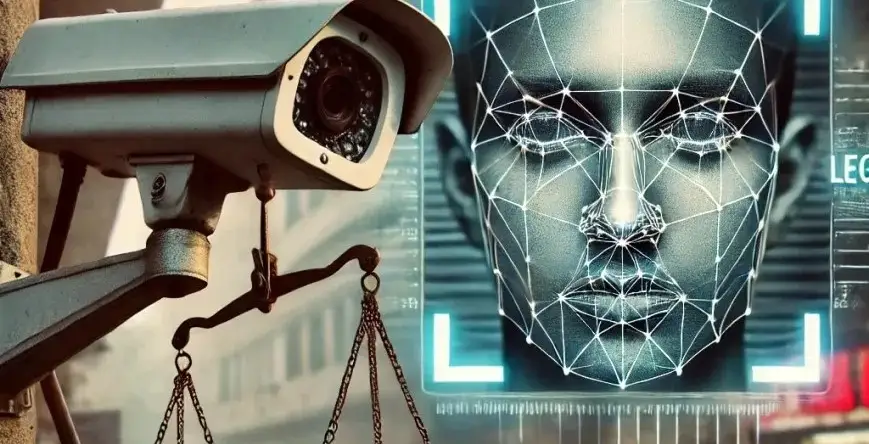
With technological advancements rapidly transforming various sectors, law enforcement agencies in India have increasingly adopted surveillance technologies to combat crime and maintain security. Tools like facial recognition systems, CCTV networks, and social media monitoring have become integral parts of modern policing. While these technologies offer the promise of enhanced public safety and more effective crime prevention, they also raise critical concerns about privacy, data protection, and state surveillance.
The Surge in Surveillance Technology Adoption: In recent years, India has seen a significant uptick in the deployment of surveillance tools.
● Facial Recognition Technology (FRT): The government has rolled out facial recognition systems across several states and cities. By 2024, India had set up 19 FRT systems in cities including Delhi, Hyderabad, Kolkata, and Lucknow. The largest of these systems is deployed at Delhi’s Indira Gandhi International Airport and the Hyderabad Police Control Room, boasting a 92% accuracy rate in identifying individuals.
● CCTV Surveillance: India has one of the world’s largest CCTV networks. As of 2023, Hyderabad ranked first in the world for the most CCTV cameras per capita, with over 600,000 cameras deployed across the city. Delhi follows closely, with over 430,000 cameras monitoring key areas to ensure public safety. According to recent reports, the Tamil Nadu government is also expanding its state-wide CCTV network with an additional 32,000 cameras installed across major cities.
● Social Media Monitoring: Law enforcement agencies have increasingly turned to social media platforms for monitoring potential threats, such as terrorism, hate speech, and public unrest. In 2021, India’s Central Bureau of Investigation (CBI) and Indian Intelligence Bureau (IB) began using AI-based social media tracking tools to detect patterns and suspicious activities. This technology played a key role in monitoring the 2021 farmers’ protests, where data from Facebook, Twitter, and WhatsApp was analyzed to track protests and preempt violent clashes.
The Benefits of Surveillance in Crime Prevention: The use of advanced surveillance technologies has undoubtedly improved the efficacy of crime detection and prevention.
● Crime Reduction: In areas with heavy CCTV coverage, crimes such as theft, assault, and vandalism have decreased. In Delhi, a report by the Delhi Police indicated a 27% drop in street crimes following the installation of additional surveillance cameras in crime-prone areas.
● Solving Crimes Faster: Facial recognition software has also helped solve high-profile cases. In 2022, facial recognition systems were used to identify suspects in the Hyderabad rape-murder case, leading to their swift arrest. Similarly, in Mumbai, the police used FRT to track down and arrest over 1,000 wanted criminals in less than a year.
● Monitoring Large Crowds: Surveillance systems have been pivotal in ensuring crowd control and preventing stampedes during large public events like the Kumbh Mela and protests. The 2023 G20 Summit in Delhi saw extensive use of AI-driven crowd management systems, reducing the risk of violence or public disturbances.
The Privacy and Ethical Concerns: Despite the potential benefits, the use of surveillance technologies has led to significant concerns, particularly around privacy violations and the growing culture of state surveillance.
● Facial Recognition and Privacy Issues: According to a study by Internet Freedom Foundation (IFF), India’s facial recognition systems are operating without any comprehensive legal framework governing their use, leading to concerns about misuse, data breaches, and invasive surveillance. For example, the Hyderabad system has been criticized for using live facial recognition without obtaining citizens' consent, sparking privacy violations.
● Bias and Accuracy Concerns: FRT has been criticized for racial and gender biases. Studies have shown that facial recognition technologies are often less accurate in identifying people of color and women. A 2021 report by MIT revealed that FRT’s accuracy dropped to 79% for dark-skinned women, compared to 99% for light-skinned men. In India, these biases can lead to wrongful detentions and arrests, disproportionately affecting marginalized communities.
● Mass Surveillance and Data Security: The Data Security Council of India (DSCI) reported a 45% increase in cyberattacks targeting law enforcement agencies in 2023, raising concerns about the security of personal data collected through surveillance systems. There is also growing worry that the use of social media monitoring could lead to chilling effects on free speech, as users become hesitant to express political dissent or participate in protests.
The Legal and Regulatory Vacuum: India currently lacks a dedicated data protection law to regulate the usage of these technologies. The Personal Data Protection Bill, which was expected to provide a framework for the protection of individual privacy, remains pending. The lack of clear regulations has resulted in unchecked surveillance practices.
The newly enacted Digital Personal Data Protection Act (2023) addresses some privacy concerns but has been criticized for granting broad surveillance powers to the government without strong oversight mechanisms. Activists argue that this allows law enforcement agencies to gather sensitive personal data without robust checks, leading to potential abuse.
The Way Forward: Balancing Security and Privacy: While surveillance technologies can enhance public safety and aid law enforcement, it is essential to balance their deployment with the protection of individual rights. The following steps can help ensure a fair use of surveillance technologies:
● Legal Framework: A comprehensive data protection law is needed to regulate the collection, storage, and use of personal data, including biometric information.
● Oversight and Accountability: Independent bodies should be established to oversee the deployment of FRT and other surveillance technologies, ensuring that law enforcement agencies are held accountable for any misuse.
● Consent and Transparency: Citizens should be informed and asked for consent whenever facial recognition or other personal data collection technologies are deployed.
● Technological Improvements Governments should invest in improving the accuracy of surveillance technologies to minimize biases and ensure that no community is unfairly targeted.
Constitutional Provisions
● Article 21 of the Indian Constitution: The right to privacy was interpreted as an intrinsic part of the right to life and personal liberty under Article 21 in the landmark Puttaswamy case (2017). This judgment laid the foundation for future legal challenges related to state surveillance, making privacy a fundamental right.
● Article 19(1)(a): This article guarantees the freedom of speech and expression. Concerns have been raised that increased surveillance and social media monitoring by the state could lead to a chilling effect on free speech, limiting citizens' willingness to express dissent or protest.
Existing Legal Framework and Provisions
While India lacks a dedicated surveillance law, various legal provisions govern the use of surveillance technologies:
● The Indian Telegraph Act, 1885: This act allows the government to intercept telecommunication services in cases of public emergency or for public safety. However, the broad powers it grants to the state have been criticized for being outdated and prone to misuse.
● Information Technology (IT) Act, 2000:
Section 69: This section empowers the government to issue directions for interception, monitoring, or decryption of any information through any computer resource if it is necessary for the sovereignty, integrity, or security of India, among other reasons.
Section 66E: It addresses violations of privacy involving the capture, publication, or transmission of images of a private area of any person.
● Impact on Surveillance: The IT Act provides the legal basis for cyber surveillance and monitoring of digital communications but lacks robust data protection provisions.
● The Digital Personal Data Protection Act, 2023: This act introduces data protection regulations but also provides broad exemptions to the government for purposes of national security and public order. Critics argue that these exemptions undermine privacy rights and enable unchecked surveillance by law enforcement agencies.
Landmark Judgments
● Justice K.S. Puttaswamy (Retd.) & Anr. v. Union of India (2017): This case is a cornerstone in India’s legal framework concerning privacy. The Supreme Court of India declared that privacy is a fundamental right under the Indian Constitution, overriding any blanket surveillance without adequate legal safeguards. The judgment emphasized that any surveillance system must be reasonable, just, and fair, aligning with the constitutional right to privacy.
The decision has been critical in framing the debate around the legality of facial recognition systems (FRT) and CCTV monitoring. After this ruling, any surveillance system that compromises privacy must be subject to judicial oversight and adhere to the principle of proportionality.
● Shreya Singhal v. Union of India (2015): This case dealt with online speech and freedom of expression. The Supreme Court struck down Section 66A of the Information Technology Act, which criminalized sending offensive messages through communication services, as unconstitutional. This judgment has broader implications for the monitoring of online activities by law enforcement agencies.
It reaffirmed the protection of free speech against arbitrary state action, suggesting that while surveillance is permissible for security purposes, it cannot unduly infringe upon the freedom of expression.
● Aadhaar Judgment (2018): The Supreme Court upheld the constitutionality of the Aadhaar scheme but imposed restrictions on its use, particularly regarding mandatory Aadhaar linking for purposes not related to subsidies or welfare schemes. It noted that Aadhaar data could not be used for mass surveillance.
This ruling emphasized the importance of data protection and restricted the use of biometric data for surveillance purposes, except under strict safeguards, marking an important step in ensuring the proportionality of state actions involving personal data collection.
Recent Surveillance-Related Cases
● Anivar Aravind v. Union of India (2020): This case challenged the mandatory use of the Aarogya Setu app for accessing services during the COVID-19 pandemic. The petitioner argued that mandatory surveillance through the app violated the right to privacy. The court’s observations highlighted the need for voluntary use of surveillance tools in compliance with privacy standards.
This case emphasized the need for voluntary consent in the use of surveillance technologies, particularly those related to public health.
● Bombay High Court’s Jai Prakash Kulkarni (2024): In this case, the Bombay High Court held the Bank of Baroda liable for lapses in its two-factor authentication (2FA) security measures after the petitioner's account was fraudulently accessed. The bank was ordered to refund ₹76,90,017 along with interest.
This judgment reinforces the principle that financial institutions and entities collecting personal data are responsible for ensuring secure and lawful processing of that data, including the use of robust security measures to prevent cyber fraud.
Ongoing Legislative and Judicial Developments
● Proposed Data Protection Authority: Under the Digital Personal Data Protection Act (2023), the creation of a Data Protection Authority (DPA) has been proposed to monitor data practices across sectors, including law enforcement. However, legal experts have raised concerns about the broad powers granted to the government under this law to exempt itself from surveillance regulations.
● Calls for a Surveillance-Specific Law: Legal scholars and civil rights activists continue to call for the creation of a comprehensive surveillance law in India that addresses the legal void around the use of facial recognition, CCTV, and digital monitoring systems.
The use of surveillance technologies in India raises critical legal questions about privacy, civil liberties, and the scope of government powers. While the Indian judiciary has taken steps to define and safeguard the right to privacy, the lack of a specific legal framework governing the use of surveillance technologies leaves room for misuse. A balance must be struck between the efficiency of law enforcement and the protection of individual rights, ensuring that surveillance is both proportional and accountable to the public. As India continues to integrate AI-driven systems into policing, the debate around privacy, civil liberties, and state overreach will only intensify. A forward-thinking legal framework is essential to ensure that these technologies are used responsibly, without infringing on individual rights.