
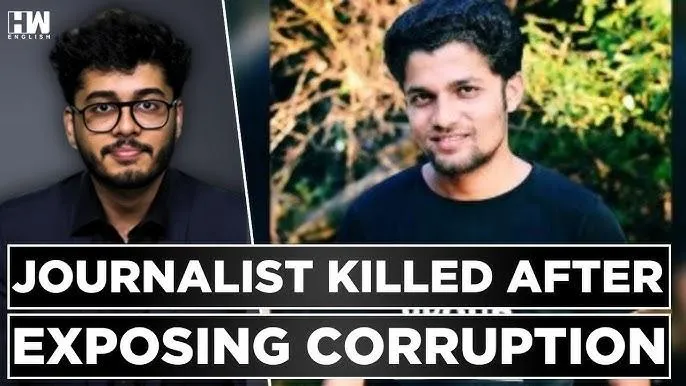
The murder of Mukesh Chandrakar, a freelance journalist and prominent whistleblower, has sent shockwaves across Chhattisgarh and beyond. In December 2024, Chandrakar, through his popular YouTube channel Bastar Junction exposed widespread corruption in the construction of a 52.40 km road between Gangaloor and Nelsnar in the Bijapur district. His investigative reporting highlighted the use of substandard materials and financial irregularities allegedly involving contractors and officials of the Public Works Department (PWD).
The revelations triggered a public outcry, drawing significant attention to the mismanagement of government funds and poor infrastructure development in the region. Chandrakar’s findings led the Chhattisgarh government to initiate an inquiry into the project that revealed the the original project’s cost at ₹73.08 crore in 2010, eventually escalated to ₹188.78 crore by 2021. hockingly, payments totalling ₹116 crore were made for work that was incomplete and of substandard quality. The investigation also led to the suspension of two PWD officials, Sub-Divisional Officer RK Sinha and Deputy Engineer GS Kodopi, and an FIR against retired Executive Engineer BL Dhruv. These developments highlighted systemic corruption within the state’s infrastructure projects.
However, the investigation took a tragic turn when Chandrakar’s body was discovered on January 3, 2025, in a septic tank at the home of Suresh Chandrakar, a contractor implicated in the road project and Mukesh’s cousin. Police reports suggest that Mukesh had been brutally attacked, and his death is believed to be directly linked to his exposé of the corruption scandal. Suresh Chandrakar was arrested for his alleged involvement in the murder. This case has highlighted the grave risks faced by journalists who expose wrongdoing, particularly in regions where corruption is deeply entrenched. Mukesh Chandrakar’s death has sparked calls for stronger protections for investigative journalists and intensified scrutiny of government projects in Chhattisgarh. Media organizations and human rights groups have condemned the incident, demanding justice for Mukesh and systemic reforms to safeguard press freedom and transparency.
Former RAW Officer Accused of Assassination Plot Faces U.S. Charges and Indian Inquiry In October 2024, the U.S. Department of Justice announced charges against Vikash Yadav, a former officer of India’s premier intelligence agency, the Research and Analysis Wing (RAW). Yadav was accused of orchestrating a failed assassination attempt targeting Gurpatwant Singh Pannun, a prominent Sikh separatist leader and U.S. citizen. Pannun, who leads the secessionist group Sikhs for Justice (SFJ), has been a vocal advocate for Khalistan, a separate Sikh homeland, and has frequently clashed with Indian authorities. According to U.S. prosecutors, Yadav recruited Nikhil Gupta to coordinate the plot, which involved hiring an assassin.
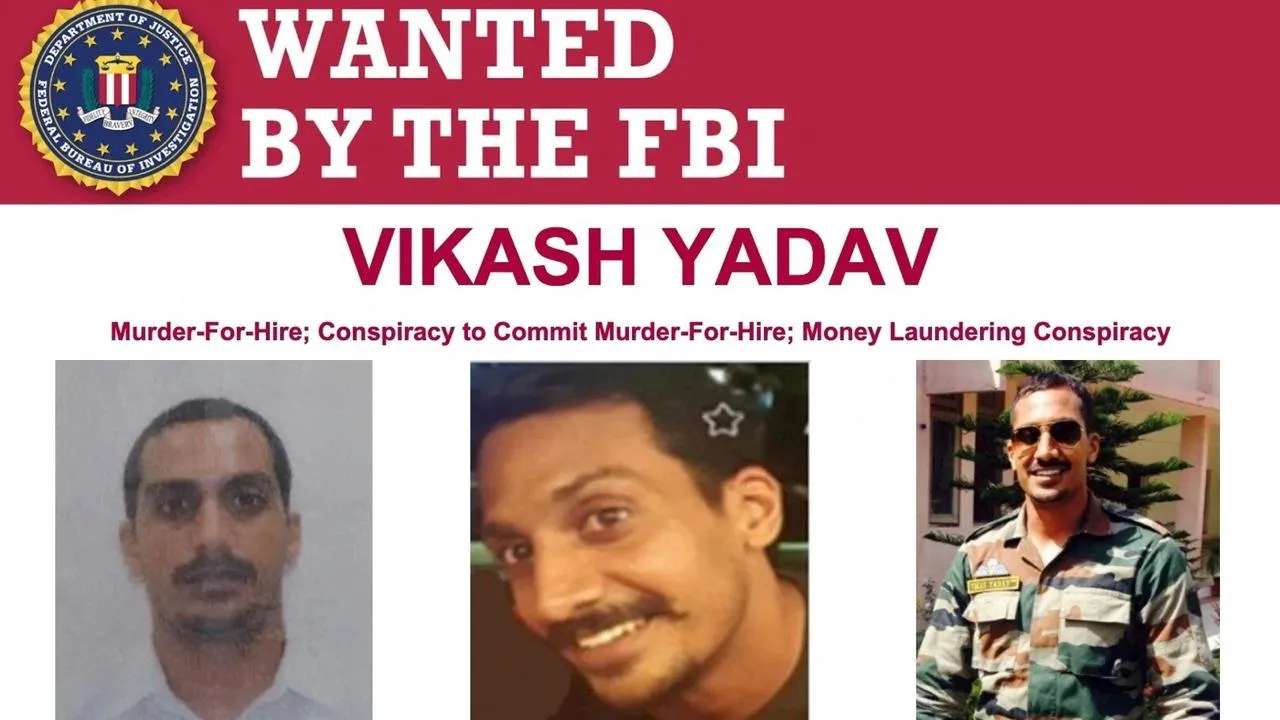
However, the plan collapsed when the hired assassin turned out to be an undercover agent working with U.S. law enforcement. Gupta, a key intermediary in the conspiracy, was arrested in the Czech Republic and later extradited to the United States, where he pleaded not guilty to the charges. The U.S. government described the plot as a direct threat to national security, highlighting its implications for international diplomacy.
In the wake of these allegations, the Indian government launched an internal inquiry to investigate the incident. By January 2025, the inquiry committee identified Yadav, referred to in U.S. legal documents as 'CC-1,' as the central figure in the plot. The committee's findings cited Yadav's alleged history of involvement in illicit activities, leading to recommendations for legal action against him. The Indian Home Ministry emphasized the need for swift judicial proceedings and proposed a review of internal protocols within intelligence agencies to prevent such breaches in the future.
The case has further strained India's international relations, particularly with Canada and the United States. Both countries have expressed concerns over allegations of Indian involvement in overseas assassinations targeting Sikh leaders. The incident follows months of diplomatic friction with Canada, where Prime Minister Justin Trudeau accused India of being involved in the killing of Hardeep Singh Nijjar, a pro-Khalistan activist, on Canadian soil. While India has denied these allegations, cases like Yadav's have brought renewed scrutiny to its intelligence operations abroad. This development has not only escalated tensions with Western nations but also raised questions about the conduct and oversight of intelligence activities, putting India under intense international pressure to address the allegations and ensure accountability.

On January 10, 2025, the Telangana Criminal Investigation Department (CID) apprehended 47-year-old Kurrimela Ramesh Goud from Jangaon district for his alleged involvement in a ₹95 crore cryptocurrency fraud. Goud is accused of orchestrating a large-scale scam through a fake website named "GBR" and leveraging a WhatsApp group to lure unsuspecting investors. Nearly 44 victims were trapped with promising returns on cryptocurrency investments. The scam came to light after Arra Manoz, a resident of Karimnagar district, complained to the authorities. Acting on the complaint, the CID launched an investigation, which resulted in Goud's arrest and his remand to judicial custody on January 8.
According to investigators, Goud and his associates managed to deceive at least 44 victims, persuading them to transfer a staggering ₹95 crore. However, the victims had to suffer significant financial losses as no said promises were fulfilled.
A case has been registered under Section 5 of the Telangana Protection of Depositors and Financial Establishment Act-1999 and Section 5 of the Prize Chits and Money Circulation Scheme (Banning) Act-1978. The CID is actively working to identify and apprehend other individuals involved in the scam. Authorities have issued a warning to the public, urging them to exercise caution and verify the legitimacy of investment opportunities before committing funds.
This incident highlights the growing prevalence of cryptocurrency-related fraud in India and the urgent need for regulatory measures to safeguard investors against such schemes.
The Allahabad High Court recently rejected a plea from the Muslim side challenging the maintainability of suits filed by Hindu parties regarding the disputed Shahi Idgah mosque in Mathura. This decision marks a significant development in the long-standing legal battle over the religious site.
The Mathura Shahi Idgah dispute is centered around the Shahi Idgah mosque, which is adjacent to the Krishna Janmabhoomi temple. The Hindu plaintiffs claim that the mosque was constructed on the birthplace of Lord Krishna, known as the Krishna Janmabhoomi. They seek the removal of the mosque and the restoration of the temple's original site.

On August 1, 2024, the Allahabad High Court heard arguments regarding the maintainability of the suits filed by Hindu parties. The Muslim side argued that the suits were barred by the Places of Worship (Special Provisions) Act, 1991, which aims to maintain the religious character of places of worship as they existed on August 15, 1947. The Hindu plaintiffs contended that the Act did not apply to their case, as it involved a historical injustice that needed rectification.
The Allahabad High Court, after considering the arguments, rejected the plea from the Muslim side. The court ruled that the suits filed by the Hindu parties were maintainable and could proceed to trial. The decision was welcomed by Hindu organizations, while the Muslim parties expressed their intention to challenge the ruling in the Supreme Court.
● Hindu Plaintiffs: Multiple Hindu organizations and individuals, including the Krishna Janmabhoomi Nyas, are plaintiffs in the case.
● Muslim Defendants: The Shahi Idgah mosque management committee and other Muslim representatives.
● Judges: The ruling was delivered by a bench comprising Justice Dinesh Kumar Singh and Justice Subhash Chandra Sharma.
Implications: This ruling is expected to intensify the legal battle over the Mathura Shahi Idgah mosque. It also raises questions about the applicability of the Places of Worship Act and the potential for similar disputes across India.

The Delhi Court recently dismissed the anticipatory bail application of Puja Khedkar, a former IAS trainee accused of cheating and forgery in securing her selection in the Civil Services Examination.
Puja Khedkar, a trainee IAS officer, has been embroiled in a legal battle over allegations of cheating and forgery. The case came to light after an investigation revealed discrepancies in her examination papers and documents submitted during the Civil Services Examination.
Khedkar is accused of using fraudulent means to secure her selection in the Civil Services Examination. The allegations include tampering with answer sheets and using forged documents. The Central Bureau of Investigation (CBI) is probing the case, following a complaint filed by the Union Public Service Commission (UPSC).
On August 1, 2024, Khedkar's anticipatory bail application was heard in the Patiala House Court, Delhi. Her defense argued that she was being falsely implicated and that she had cooperated fully with the investigation. The prosecution, however, contended that granting bail could impede the ongoing investigation and that there was substantial evidence against her.
The court dismissed Khedkar's anticipatory bail application, citing the gravity of the allegations and the need for a thorough investigation. The judge emphasized that the integrity of the Civil Services Examination process must be upheld.
● Accused: Puja Khedkar, former IAS trainee.
● Investigating Agency: Central Bureau of Investigation (CBI).
● Judge: The decision was delivered by Additional Sessions Judge Rakesh Syal.
Implications: The court's decision underscores the seriousness with which allegations of cheating and forgery in competitive examinations are treated. It also highlights the judicial system's commitment to ensuring the integrity of such processes.
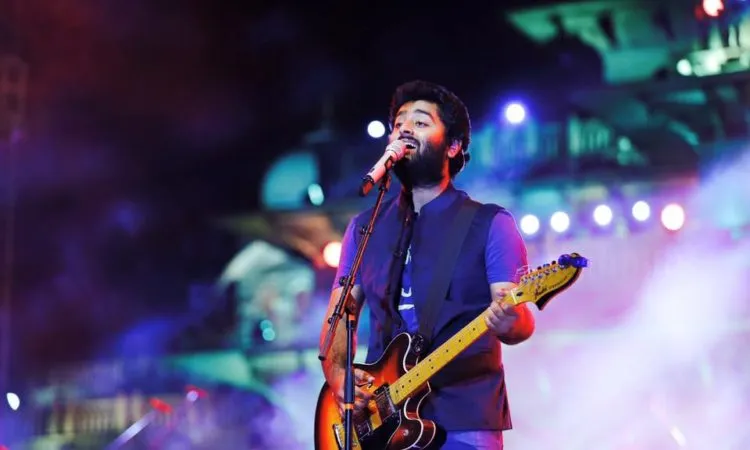
Bombay High Court Grants Interim Relief to Arijit Singh; Restrains AI Platforms from Violating Personality Rights.
Arijit Singh, a prominent figure in the Indian music industry, filed a lawsuit against several AI platforms for unauthorized use of his voice and likeness. The platforms allegedly used AI technology to create songs and content that mimicked Singh's voice without his permission.
On July 31, 2024, the Bombay High Court heard the case. Singh's legal team presented evidence of the AI-generated content and argued for an injunction to prevent further unauthorized use. The defendants argued that their use of AI technology was within legal bounds and that they had not violated any rights.
The court granted interim relief to Singh, restraining the AI platforms from using his voice and likeness without authorization. The judge highlighted the importance of protecting individuals' personality rights in the digital age and noted the potential harm caused by unauthorized AI-generated content.
● Plaintiff: Arijit Singh, singer.
● Defendants: Several AI platforms accused of unauthorized use.
● Judge: The interim relief was granted by Justice Suresh Kumar.
Implications: This case sets a significant precedent for the protection of personality rights in the context of AI technology. It underscores the need for clear legal frameworks to address the challenges posed by AI-generated content and its impact on intellectual property and individual rights.